
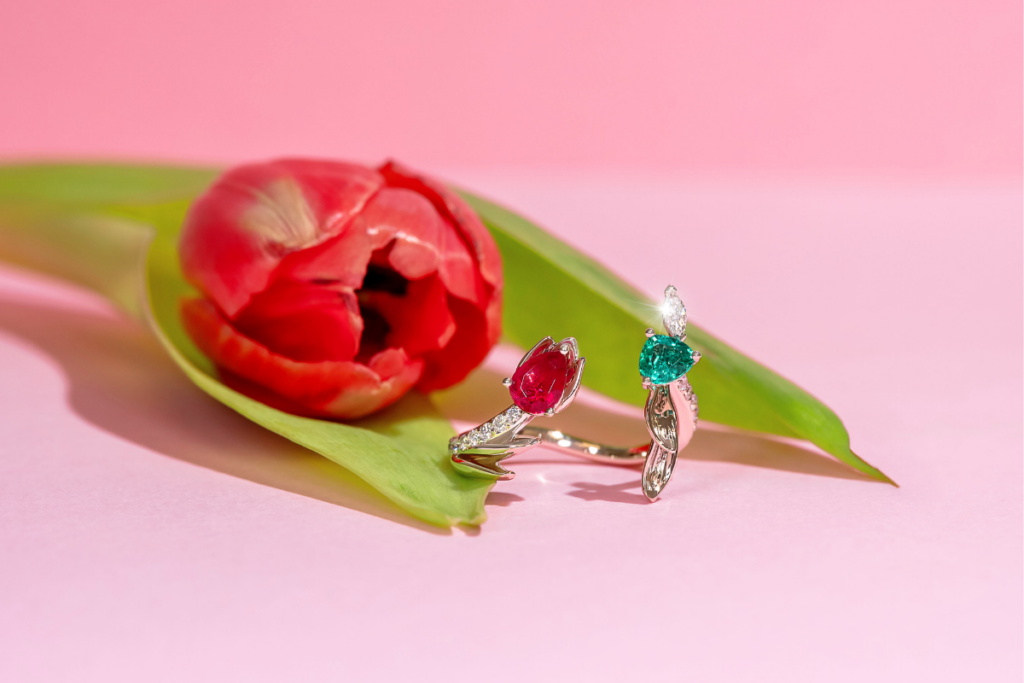
In the world of coloured gemstones, Emerald, Ruby and Sapphire get all the attention, but some of the rarest gems on Earth are ones most people will never see in person… let alone own. Here are five that make even seasoned jewellers and the most discerning gem collectors pause.
Taaffeite
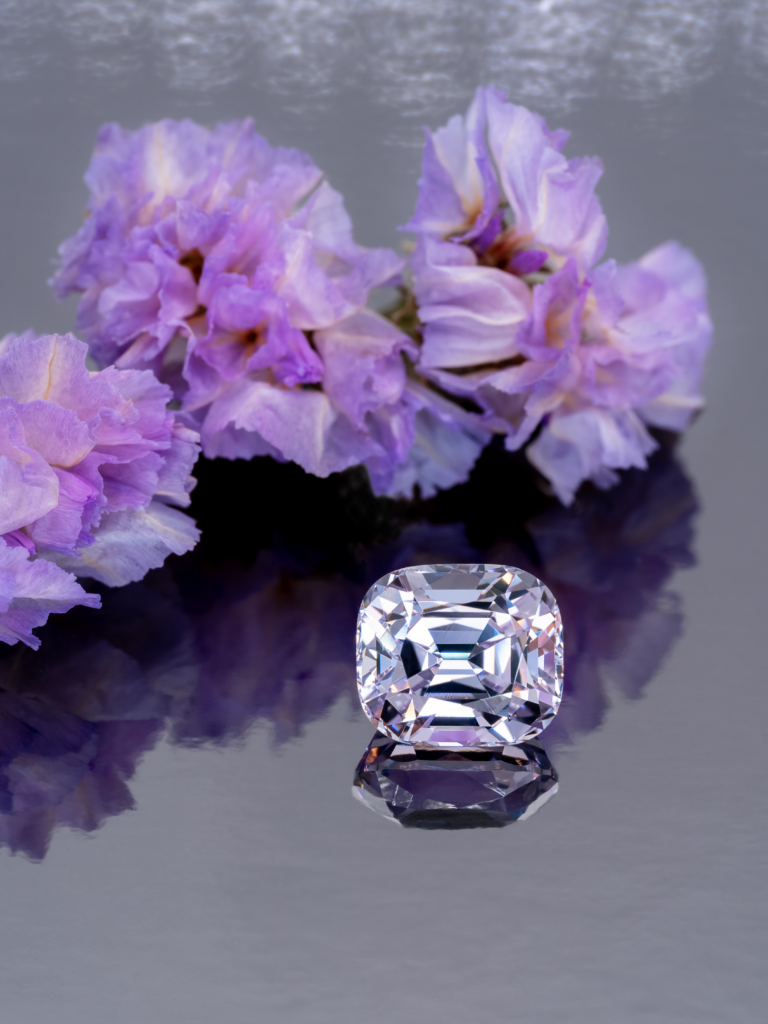
A soft mauve, violet, or pale pink stone found mainly in Sri Lanka and Tanzania. Taaffeite has an unusual claim to fame: it’s the only gemstone ever identified after being cut and polished, rather than discovered as rough crystal.
In 1945, a Dublin gem dealer named Richard Taaffe noticed a faceted stone in his collection didn’t behave like the Spinel it was sold as, and testing revealed a brand-new mineral. Decades later, Taaffeite remains so scarce that gemmologists estimate the entire known supply (basically every carat ever found since 1945), still doesn’t add up to what the diamond industry mines in a single day!
Zultanite
This colour-change gem shifts from a yellowish green in daylight to pink, raspberry, or champagne under warm indoor light. What makes it so rare isn’t just the colour-change, it’s that every piece of gem-quality Zultanite on Earth comes from a single mine in the Ilbir Mountains of Turkey. There’s no second source, so once that deposit is worked out, that’s it.
Fun fact: “Zultanite” is actually a trade name for Diaspore, the same aluminium oxide mineral found in deposits worldwide. However, the Turkish material is unusually large, clean, and strongly colour-changing, a combination rare enough that gemmologists treat it as its own category.
Grandidierite

A blue-green stone first identified in Madagascar in the early 1900s, named after French explorer Alfred Grandidier.
For most of its history, Grandidierite existed only as opaque or cloudy specimens, suitable for museum artefacts but not in jewellery. The first-ever transparent, facetable crystal wasn’t found until 2014, meaning cut and polished Grandidierite gemstones have existed for barely over a decade, and clean, eye-clean material remains almost impossible to find. But hey, if you come to MADLY right now… we have some on hand.
Bixbite (Red Beryl)
Sometimes called “red Emerald,” Bixbite is Beryl’s red variety, and is only found in exactly one place: the Wah Wah Mountains of Utah. For Bixbite to form, it requires an unusual combination of beryllium, manganese, and volcanic heat all coming together, a geological coincidence that rarely repeats. According to the Utah Geological Survey, Bixbite is 150,000 times rarer than a gem-quality diamond.
Sphene (Titanite)
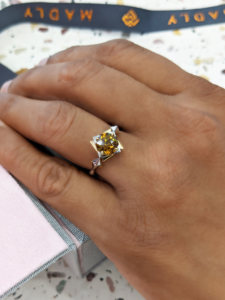
Sphene’s rarity has nothing to do with where it’s found, it turns up in several countries around the world. What makes it special is that so few gems can match its extraordinary sparkle, with dispersion (the “fire” that breaks light into colour) that’s even higher than diamond. That brilliance comes from a delicate structure, sitting at just 5 to 5.5 on the hardness scale, which means it takes real skill and patience to cut well. Only a handful of cutters take it on, which is exactly why a finished sphene is treated as a true collector’s prize rather than an everyday stone.
–
Each of these stones is rare for a different reason: some because of pure geographic luck, some because of chemistry that rarely lines up, and some because they’re simply too fragile to use. Together, they’re a reminder that “rare” in the gem world doesn’t always mean the same thing twice.
We’ve had the privilege of seeing every one of these in the flesh (or in the rock hehe) here at MADLY. So if you’re on the hunt for something truly special, come by. Stones like these don’t sit on shelves for long!